

New Mexico PFAS
July 10, 2026 | Written by GreenSoft Technology, Inc.
Navigating New Mexico's PFAS Final Rule: What Manufacturers Need to Know
Overview of New Mexico PFAS Law, Timeline, and Reporting Requirements
New Mexico has joined the growing wave of U.S. states adopting broad PFAS restrictions. Following the passage of the PFAS Protection Act (HB 212) in April 2025, the New Mexico Environmental Improvement Board (EIB) finalized Rule 20.13.2 NMAC on May 5, 2026, with an effective date of July 1, 2026.
The new rule establishes sweeping requirements for manufacturers, including product prohibitions, reporting, labeling, testing, fees, and a pathway for Currently Unavoidable Use (CUU) determinations. With these actions, New Mexico becomes the third state, after Maine and Minnesota, to implement comprehensive PFAS controls across product categories.
Key Compliance Dates for Manufacturers
Manufacturers should prepare for a multi‑year rollout of obligations and product restrictions:
- July 1, 2026 – Final rule takes effect
- January 1, 2027 – Reporting and labeling requirements begin
(The labeling requirement applies to products manufactured after January 1, 2027.) - January 1, 2027 – First round of product bans
- January 1, 2028 – Additional product bans take effect
- January 1, 2032 – General PFAS prohibition unless exempt or approved as a CUU
These deadlines create a tight compliance timeline, particularly for companies with complex supply chains.
PFAS Product Bans and Restricted Product Categories
New Mexico’s phased product bans mirror the structure seen in Maine and Minnesota, with early restrictions targeting consumer goods most likely to contain intentionally added PFAS.
2027 Bans
Beginning January 1, 2027, the following products may not be sold if they contain intentionally added PFAS:
- Cookware
- Food packaging
- Dental floss
- Juvenile products
- Firefighting foam
Importantly, electronics are excluded from the definition of juvenile products, preventing unintended impacts on the electronics sector.
2028 Bans
On January 1, 2028, the list expands to include:
- Carpets and rugs
- Cleaning products
- Cosmetics
- Fabric treatments
- Feminine hygiene products
- Textiles and textile furnishings
- Ski wax
- Upholstered furniture
Beginning in 2028, reportable products containing intentionally added PFAS may not be sold in New Mexico unless required reporting information has been submitted.
PFAS Reporting, Labeling, and Disclosure Requirements for Manufacturers
Manufacturers of products containing intentionally added PFAS must begin reporting to the New Mexico Environment Department (NMED) on or before January 1, 2027. Required information includes:
- Product identification (including UPC, SKU or other code)
- PFAS Name
- PFAS purpose or function
- CAS numbers
- Concentration information
- Manufacturer contact details
Manufacturers must submit reports through the New Mexico PFAS Reporting System (NMPRS). NMED has published the reporting guidance and user support information.
Labeling
Consumer Products containing intentionally added PFAS must display an Erlenmeyer flask label with the word "PFAS" inside, sized no smaller than the largest font used for other consumer information on the product (e.g., disclosures, directions for use, ingredients). The label must be visible and legible to a consumer prior to purchase. If the product is sold in packaging that obscures the label, the packaging must also display the label.
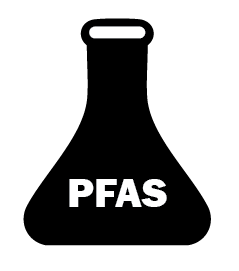
PFAS flask symbol required on products containing intentionally added PFAS.
For Complex Durable Goods containing intentionally added PFAS, the manufacturer must include the PFAS label in the consumer-facing product specification sheet (available prior to purchase) and in the product's operation and maintenance manual. The label must be at least 10-point font and easily identifiable. It is recommended that the label be placed near other environmental and public health disclosures.
Artwork for the PFAS Erlenmeyer flask label can be obtained here under “Labeling Guidance”
Product Category Exemptions Under New Mexico PFAS Rule
Several product categories are exempt from the rule’s prohibitions and reporting requirements, including:
- Medical devices
- Semiconductors
- Non‑consumer electronics
- Vehicles and aircraft
- Additional specialized products
New Mexico also introduces a unique fluoropolymer exemption, covering:
“Product that contains fluoropolymers consisting of polymeric substances for which the backbone of the polymer is either a per- or polyfluorinated carbon-only backbone or a perfluorinated polyether backbone that is a solid at standard temperature and pressure.”
Products exempt from reporting under §20.13.2.10 (Final Rule) are not automatically exempt from labeling; manufacturers should confirm whether their product qualifies under the labeling exemptions in §20.13.2.13(B) (Final Rule) or apply for a label waiver if the PFAS material will never come in contact with the consumer.
Currently Unavoidable Use (CUU) Applications
The Currently Unavoidable Use (CUU) process provides a pathway for continued sale of products containing PFAS when the PFAS use is essential, and no reasonable alternatives are available.
CUU applications are product‑category and NAICS-code specific, and require detailed technical justification. CUU proposals must generally be submitted no earlier than 60 months and no later than 12 months before the applicable prohibition, with special timing for January 1, 2027 phase-out product categories. Approved CUUs are valid for three years and the NMED may consider CUU determinations from other states, which may reduce duplicative submissions.
Manufacturers with PFAS‑dependent applications should evaluate CUU needs early due to the complexity of the process.
Testing and Enforcement
NMED may conduct product testing or require manufacturers to test products themselves. Key enforcement provisions include:
- Fluorine above 100 ppm creates a rebuttable presumption of intentionally added PFAS
- Testing results may trigger reporting obligations or market restrictions
- Beginning January 1, 2028, reportable products containing intentionally added PFAS may face market restrictions if required reporting information has not been provided.
- Penalties may reach $15,000 per violation and up to $25,000 per day for failure to comply with orders
These enforcement mechanisms underscore the importance of proactive compliance.
Fees
Manufacturers should budget for the following:
- Initial reporting fee: $2,500 / Subsequent reporting fee for significant change: $1,000
- CUU application fee: $5,000 / CUU Renewal fee: $2,500
- Label waiver fee: $2,000 per individual product / $5,000 per product class
- Fees will be adjusted annually beginning in 2028
PFAS Compliance Preparation Steps for Manufacturers and Supply Chain Teams
- Audit supply chains now to identify intentionally added PFAS
- Prepare for reporting and labeling obligations beginning in 2027
- Evaluate exemptions and determine whether CUU applications may be necessary
- Monitor NMED for updates to NMPRS guidance, labeling specifications, label-waiver procedures, and additional FAQs.
GreenSoft’s Comprehensive PFAS Solution
GreenSoft Technology supports manufacturers navigating PFAS regulations across the U.S. and globally. Our PFAS Data Services and GreenData Manager software streamline supplier engagement, data collection, reporting, and compliance management, ensuring you stay ahead of evolving requirements like New Mexico’s PFAS Final Rule.
Contact us to learn how we can support your PFAS compliance strategy.